You’re sitting on the train, or maybe waiting in line at the grocery store. Everything is normal… until suddenly, it isn’t. Your chest tightens, your heart pounds, your breathing feels shallow, and a wave of fear crashes over you. Are you having a heart attack? Are you dying?
Most likely, no. You’re experiencing a panic attack — and while it feels like your body is betraying you, it’s actually a very specific brain response at work.
A Panic Attack is Not a Heart Attack
It’s a common mistake: someone experiences intense chest pain and rushes to the ER, convinced their heart is failing — only to learn their heart is perfectly healthy.
So why the confusion? The symptoms overlap dramatically:
- Chest pain
- Shortness of breath
- Dizziness or nausea
- Feeling of doom
The cause, however, is completely different. Heart attacks are physical, caused by blocked arteries and reduced blood flow to the heart. Panic attacks are neurological storms — a misfire in the brain’s fear-response system.
The experience is real and intense, but it originates in the brain, not the heart.
The Brain on Panic: How it All Starts
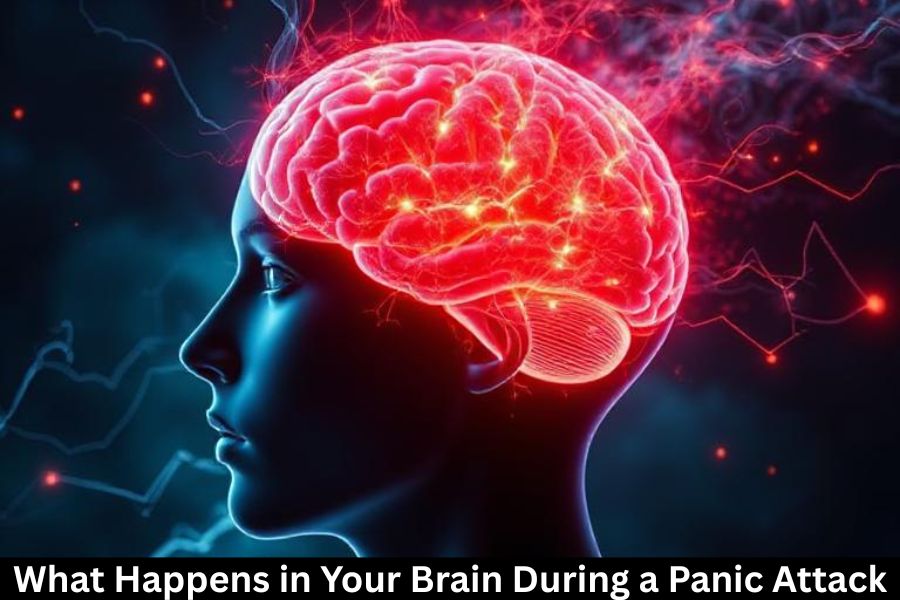
Panic attacks begin in the amygdala, a tiny almond-shaped structure in your brain responsible for detecting threats. Think of it as your brain’s “alarm system.” When it senses danger — whether real or imagined — it presses the panic button.
Next, the hypothalamus signals your adrenal glands to release stress hormones like adrenaline and cortisol. Your body responds in classic fight-or-flight mode:
- Heart rate spikes to pump blood to your muscles
- Breathing quickens to prepare for action
- Digestion slows, and blood is redirected from extremities
- Hands tingle, your stomach flips, and dizziness may follow
From the outside, it looks dramatic — because it is. But your brain interprets this as life-or-death. The prefrontal cortex, your logical thinking center, is temporarily sidelined. Reason takes a back seat to survival.
The Hippocampus: How Panic Memories Stick
After a panic attack, your hippocampus, which stores memories and emotional context, tags the situation as “dangerous.”
For example, if you had a panic attack in a crowded theater, your brain records:
- Dim lighting
- Sounds of popcorn popping
- People talking
- Time of day
The next time you encounter a similar setting, your brain recalls not just the place, but the fear itself, increasing the likelihood of another panic attack.
Research suggests that impaired hippocampal function may make it harder for your brain to “unlearn” fear, which is why panic can recur long after the initial trigger.
Why Your Brain Keeps Misfiring
Your brain isn’t panicking for no reason — it thinks it’s keeping you safe. But several factors can overstimulate your system:
- Chronic stress or burnout
- Past trauma
- Lack of sleep
- Skipping meals or low blood sugar
- Caffeine, alcohol, or certain medications
- Racing thoughts
Once you’ve had one panic attack, your brain becomes hyper-alert, watching for the next one — ironically making future attacks more likely.
The Panic Feedback Loop
Panic feeds on itself. Your body reacts to the symptoms, your brain interprets them as danger, and your body reacts again.
For example:
- Your heart skips a beat.
- You notice it and think, “Am I having a heart attack?”
- Your brain triggers a panic response.
- Your body responds more intensely.
Round and round it goes, creating the feeling that panic attacks appear out of nowhere. In reality, your brain and body are locked in a feedback loop of fear.
Rewiring the Panic Response
The good news? Neuroplasticity — your brain’s ability to change — means you can train it to respond differently.
Effective strategies include:
- Grounding techniques: Focus on physical sensations, like touching something cold or noticing objects around you.
- Breathing exercises: Slow, deep breaths signal to your brain that you’re safe.
- Cognitive Behavioral Therapy (CBT): Learn to challenge and reframe the thoughts that escalate panic.
- Exposure therapy: Gradually desensitize your brain to fear triggers in controlled, safe ways.
You’re Not Broken
Most importantly: experiencing panic attacks does not mean something is wrong with you. Your brain isn’t broken — it’s just on high alert. Understanding what happens in the brain during a panic attack can take away some of its power and help you respond rather than react.
With knowledge, practice, and the right strategies, you can regain control — one breath at a time.